Recent work
Jobs we have actually done, on real Fort Mill properties.
Home › Mulch installation
Mulch installationMost mulch jobs fail for one of two reasons: it goes down too thin to hold, or nobody cut the bed edge first. We fix both before a single bag is opened.
A yard of mulch spread thin over last year's mulch looks finished for about three weeks. Then the color goes gray, weeds come through, and the bed line has blurred into the lawn. Here's what we do instead, on every mulch job:
Double-shredded hardwood knits together as it settles, so it stays put on any bed with slope to it. It fades toward a natural brown over the season. If your beds are on a grade or you want the planting to be the thing people notice, this is the one.
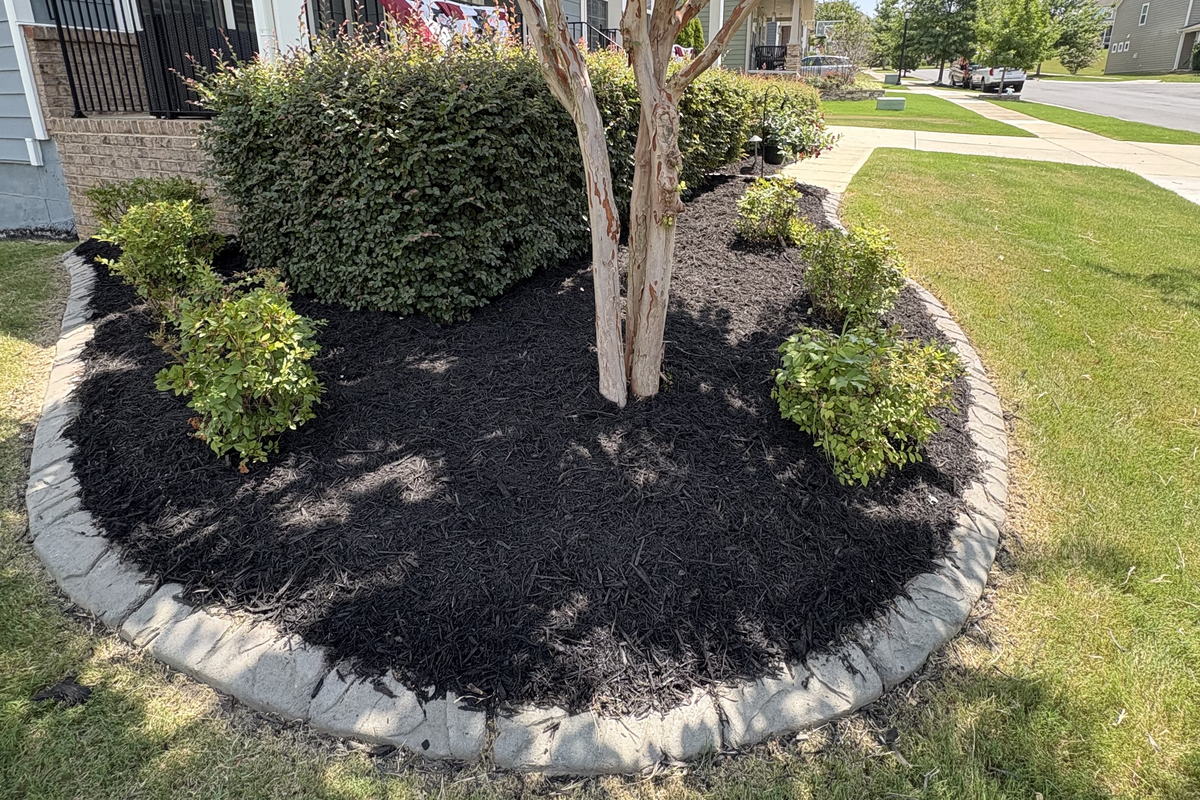
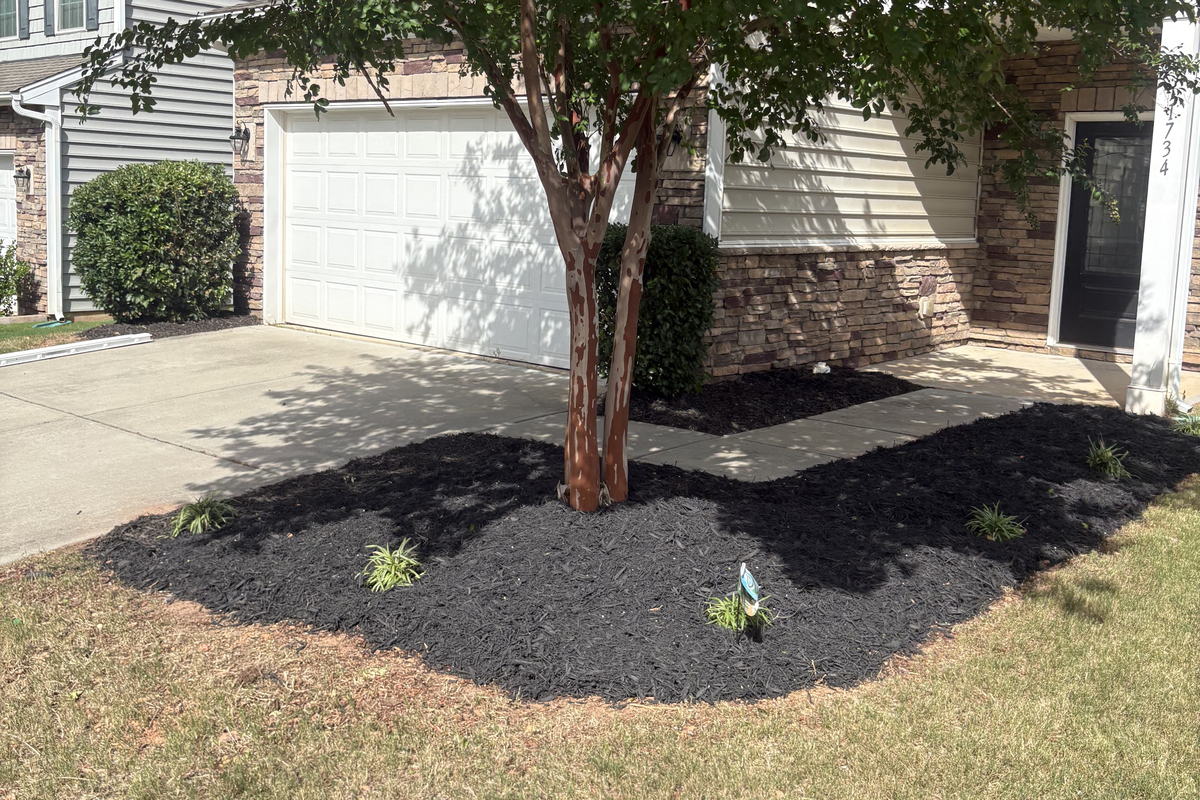
Dyed mulch — black, brown, or red — holds its color much longer. Black against a light brick or a white house is the sharpest contrast you can get in a front bed, and it's the most common request we get in the newer Fort Mill neighborhoods.
We'll tell you which one suits your beds when we walk the property. Both are priced by the yard, installed.
Spring is the busy season, and beds mulched in March and April look their best right when everything leafs out. But late-season mulch does real work too — it moderates soil temperature going into winter and keeps the beds from washing out in heavy rain.
The honest answer is that the best time is when your beds need it. If the color is gone and you can see soil through it, it needs it.
By the yard, installed. That covers the material, the edge work, the weeding, and the cleanup — not just the mulch dropped in your driveway. We measure the bed footage on site and give you a firm number for your property. Never a range, and never a per-hour surprise.
If your beds have gone past the point where mulch alone fixes them — shrubs overgrown, edges gone, the shape of the bed lost — that's bed renovation, and it's worth doing once instead of mulching over it every year.
We measure the bed footage on site and calculate it for you. As a rough guide, one cubic yard of mulch covers about 100 square feet at three inches deep. You don't need to work this out yourself before calling — the estimate includes the measurement.
Usually not, and you usually don't want us to. Old mulch breaks down into the soil and feeds it. We pull the weeds, re-cut the edge, and install fresh mulch on top. If the old material has built up several inches over multiple years, we'll tell you it needs to come out before we add more.
No, and anyone who tells you otherwise is selling something. Installed to a proper depth on a bed that was cleared first, it stops most of them and makes the rest easy to pull. Mulch spread thin over existing weeds stops nothing.
Yes. Pine straw suits wooded and sloped beds, and it's common in the older, tree-heavy parts of Fort Mill and Tega Cay. We install it by the bale and can also remove old straw before laying new.
Most residential front-bed jobs are a single visit, start to finish. Larger properties or beds that need clearing first may run a full day. You don't need to be home, and we'll text you when we're done.
Rather just talk?
Serving Fort Mill, Tega Cay, Indian Land, and Rock Hill, South Carolina.