Recent work
Jobs we have actually done, on real Fort Mill properties.
Home › Lawn care
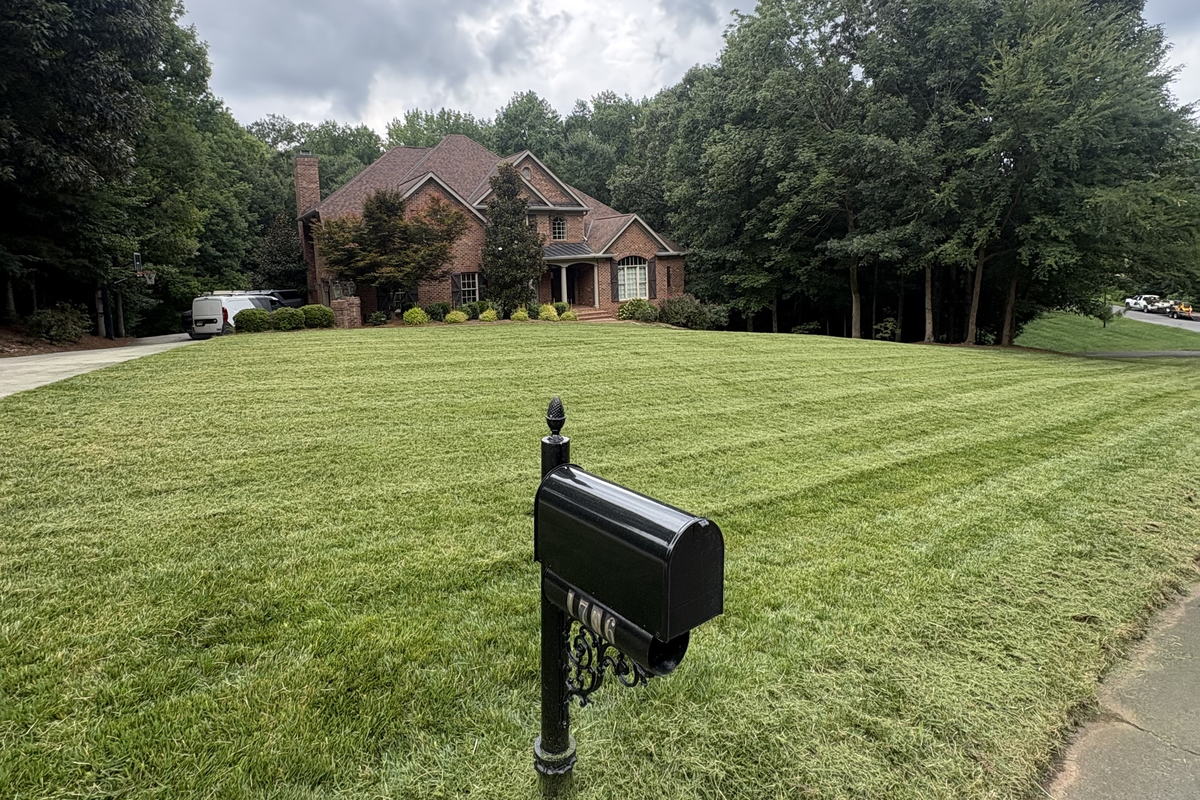
Lawn maintenanceWeekly or biweekly mowing with the trimming, edging, and blowing that most companies treat as extra. You are not signing anything, and you are not getting a different crew every week.
That's the whole visit, every visit. There is no version of our service where edging is an upcharge.
From roughly April through September in Fort Mill, bermuda grows fast enough that weekly is the honest answer. Cutting every other week in July means taking off more than a third of the blade at once, which stresses the grass and leaves clumps behind no matter how well it's mowed.
Biweekly works in the shoulder seasons, on shaded fescue lawns that grow slower, and for properties where the lawn is small enough that the growth doesn't get away.
Most of our book is biweekly, and we're straight with people about when it isn't working. If we show up and the grass is too tall to cut cleanly on your schedule, we'll tell you — we won't just keep quietly doing a worse job.
It matters more than people expect, because it changes the cut height and the schedule:
The newer, denser parts of Fort Mill — open lots, smaller yards, few mature trees — are mostly bermuda. Bermuda wants a low cut and full sun, and it grows hard all summer, which is what drives the weekly-versus-biweekly call above.
Deeper into Fort Mill and Tega Cay, where the tree cover is heavy, it's mostly fescue. Fescue wants a taller cut, struggles in August heat, and thins out under shade. Mowing it like bermuda is one of the most common ways a lawn gets ruined by a service that isn't paying attention.
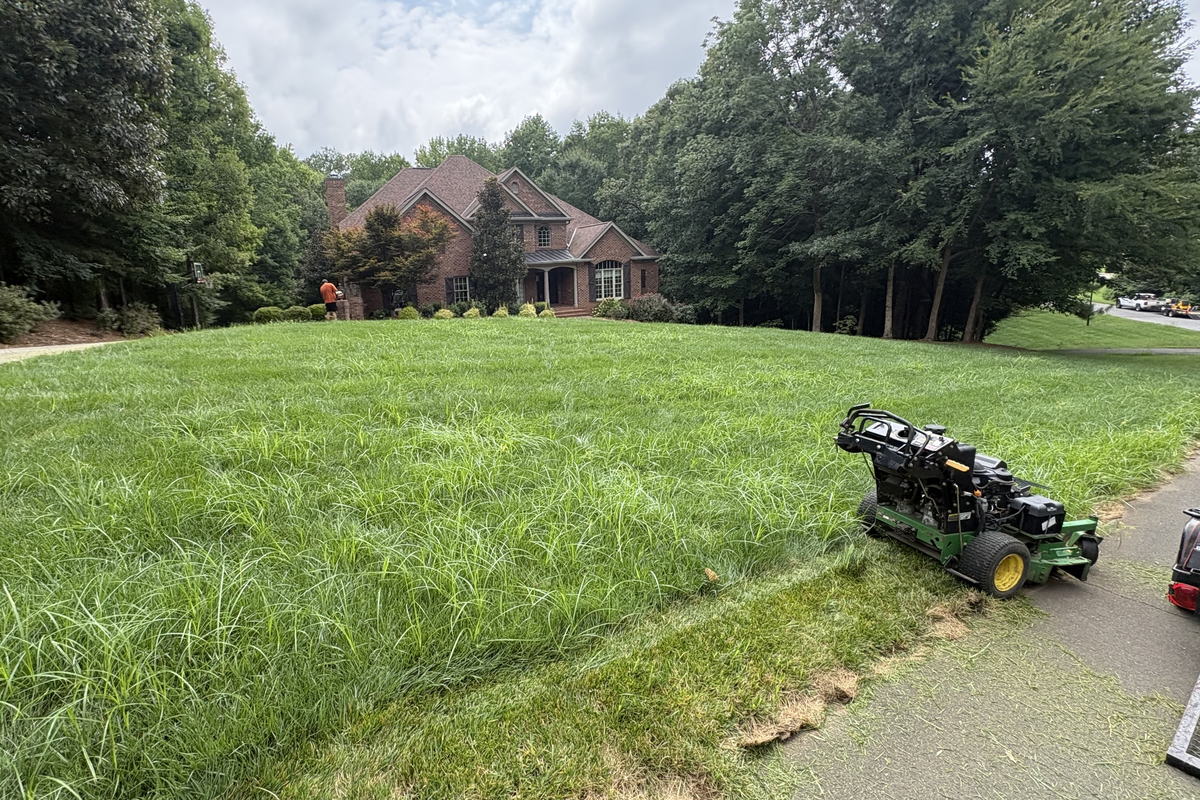
We do one-time mows, and we don't treat them as a lesser job. If it's been a while and the lawn is well past normal height, that's priced as a cleanup rather than a mow — there's a real difference in time and wear between cutting grass and cutting a field.
Plenty of our recurring clients started as a one-time cut. If it goes well, we'll check in about putting you on the schedule. If you'd rather stay one-time, that's fine too.
Nothing to sign. No cancellation window, no seasonal minimum, no auto-renew. You stay because the lawn looks right, and if it stops looking right you stop paying us.
That's not a marketing line — it's the only arrangement that makes sense for a company small enough that the owner still answers the phone.
A firm number for your specific property, based on lot size, how much trimming and edging it actually needs, and whether there are slopes or tight areas that slow a crew down. Never a range, and the number doesn't move because the grass grew.
No. Most of our clients are at work when we come. We just need gate access if the yard is fenced — tell us the code or leave it unlocked on your day.
The same day every week or every other week, so you can plan around it. Weather can push us a day, and we'll let you know when it does.
We move you, usually to the next dry day that week. We don't skip the visit and charge you for it, and we won't mow a saturated lawn — it tears the turf and ruts the ground.
Not normally. Mulched clippings return nitrogen to the lawn and are better for it. If the grass got long enough to leave visible clumps, we clean them up.
Yes, any week. If the lawn has gotten away, the first visit may be priced as a cleanup, and then it goes onto the normal rate.
Not yet. That requires a South Carolina pesticide applicator license, and we'd rather not offer it than offer it badly. We'll tell you honestly what your lawn needs, and who does that work well.
Rather just talk?
Serving Fort Mill, Tega Cay, Indian Land, and Rock Hill, South Carolina.